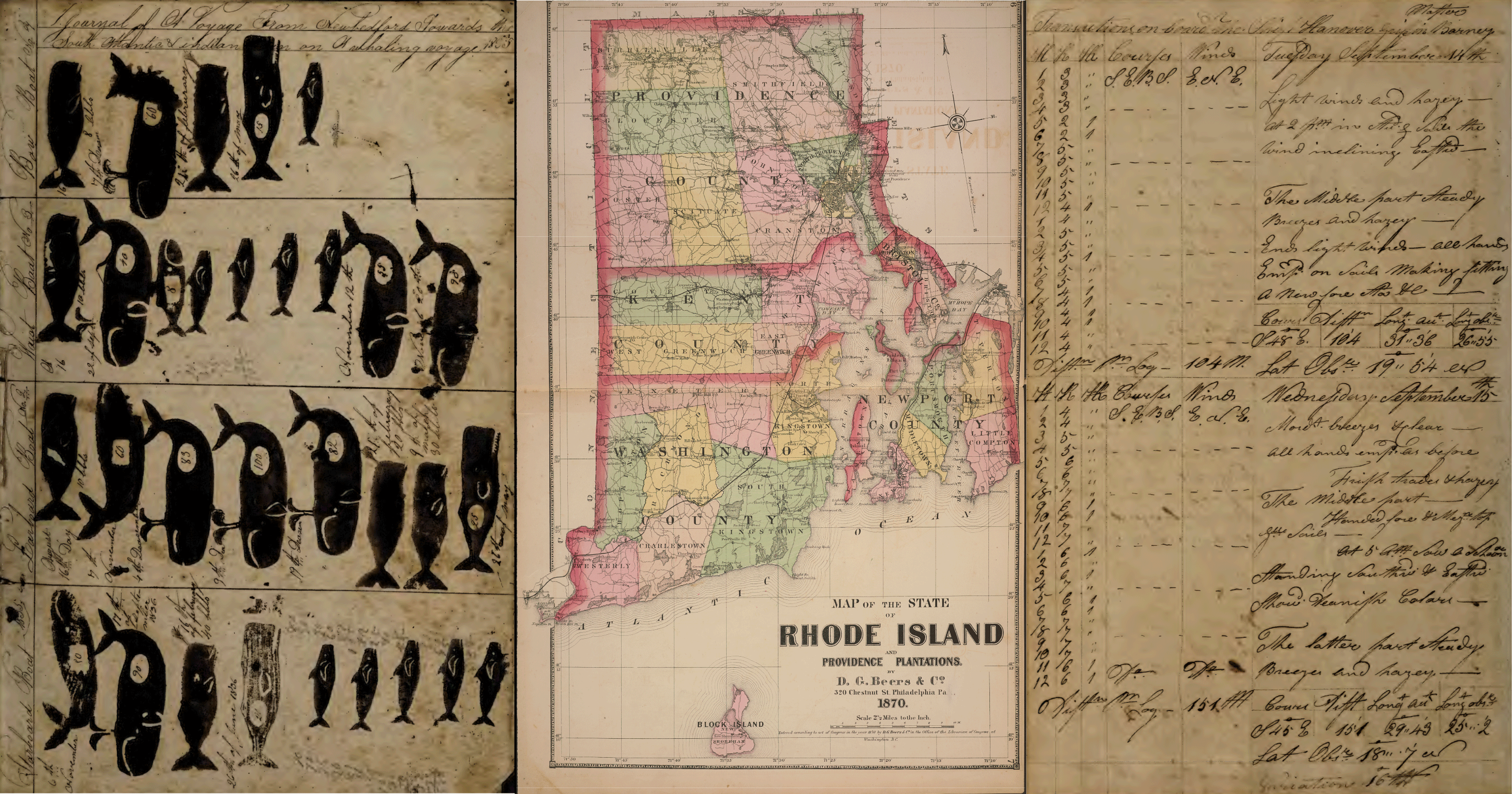
Left, right: Examples of logs kept by whalers. Center: Rhode Island map ca. 1870.
Rhode Island's identity as the Ocean State reflects a long relationship to the sea, but in the eighteenth and nineteenth centuries, this relationship extended far beyond the state borders. Whale oil lit the lamps lining Providence's streets, while lubricating the mills in Woonsocket, and softening the soaps and perfumes of Newport.
Massachusetts ports like New Bedford and Nantucket often dominate historical memory, but Rhode Island sustained a vibrant whaling industry of its own, anchored between Newport, Bristol, Warren, and Providence. These ports chart a story of ambition and exhaustion as local ventures stretched outward from the Narragansett Bay to the farthest reaches of the Pacific, only to encounter the ecological and economic limits of enterprise.
Left, right: Examples of logs kept by whalers. Center: Rhode Island map ca. 1870.
Newport was an early adopter of whaling, leveraging its mercantile networks and deep harbor to outfit voyages and process products. In late 1776, however, the British blockaded Newport and the surrounding bay, seizing products that entered the city and ending its burgeoning whaling industry. The effects of the Revolution were felt across the state: Warren lost fourteen whaling vessels to the British, while Newport's vessels were seized as far away as Barbados.
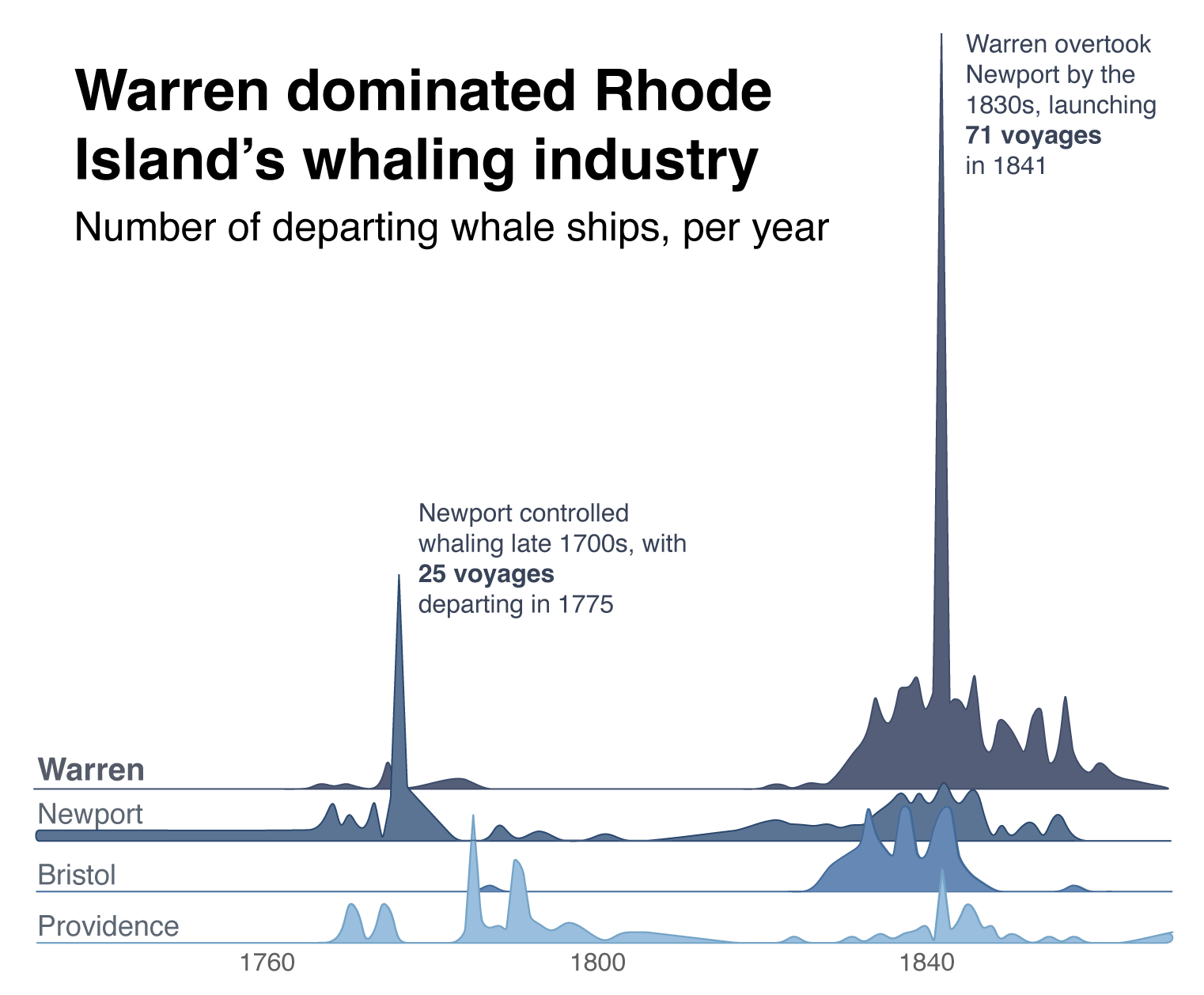
As the war drew to a close, Bristol and Warren, situated along the eastern shores of Narragansett Bay developed specialized infrastructures for shipbuilding and provisioning. By the 1840s, Warren became Rhode Island’s whaling capital, bringing in an average of 48,000 gallons of sperm oil and 34,000 gallons of whale oil per year. Providence functioned as a financial and logistical hub, connecting the industry to broader Atlantic trade circuits.
However, the reach of Rhode Island's whaling industry extended far beyond its ports. Early voyages remained relatively close to home, targeting whale populations along the North Atlantic seaboard and Gulf of Maine.
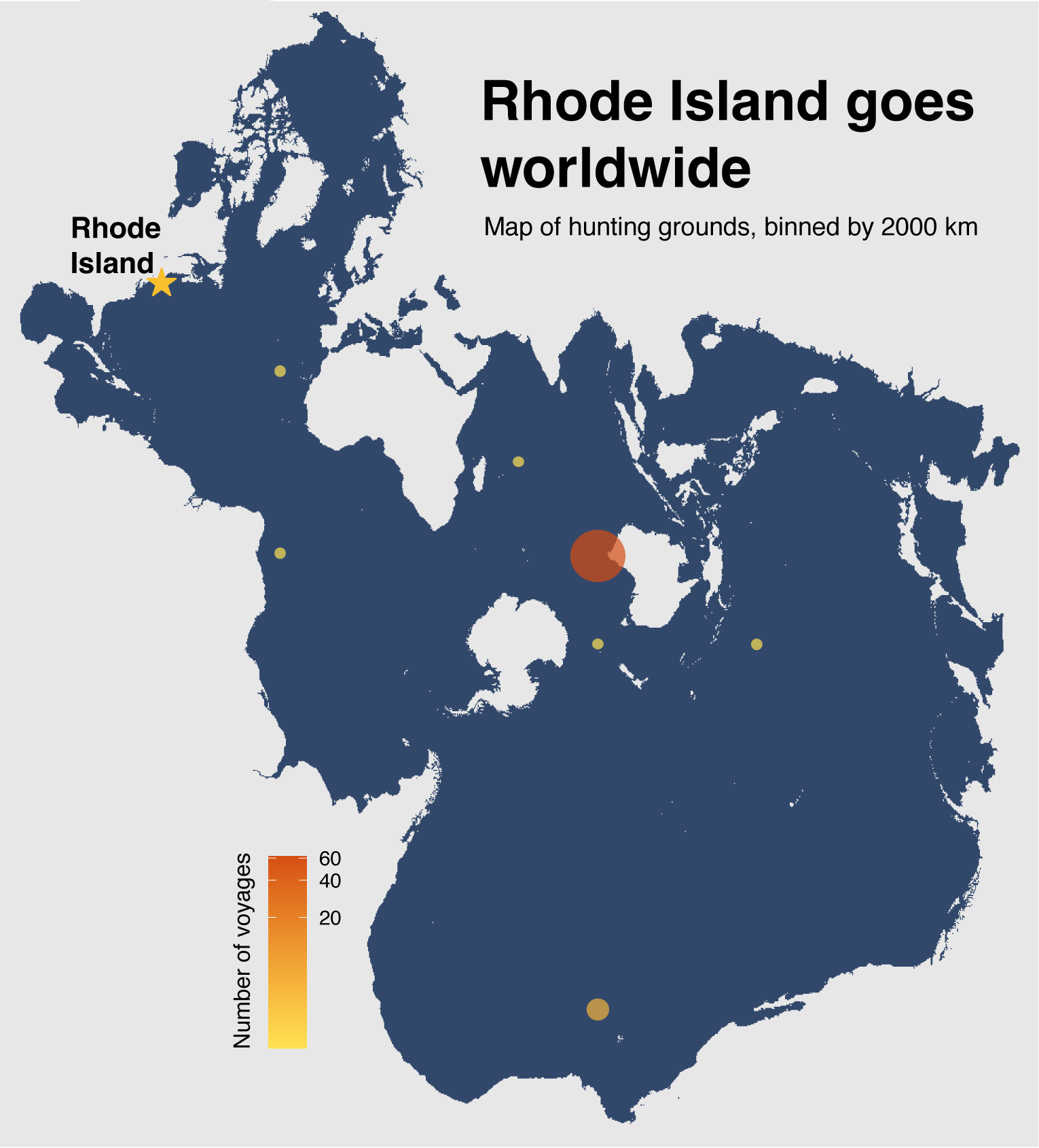
By the mid‑nineteenth century, Rhode Island vessels routinely rounded Cape Horn into the South Atlantic and South Pacific, chasing sperm and bowhead whales on multi‑year journeys that reached as far as New Zealand, Australia, and the Galapagos.
This expansion mirrored broader patterns in American whaling, but also highlights the adaptability of Rhode Island crews and merchants: each new hunting ground required longer voyages and new knowledge of oceanic conditions, whale migration patterns, and foreign ports. In this sense, Rhode Island’s whalers became global actors, participating in an early form of industrialized resource extraction that linked local economies to distant ecosystems.
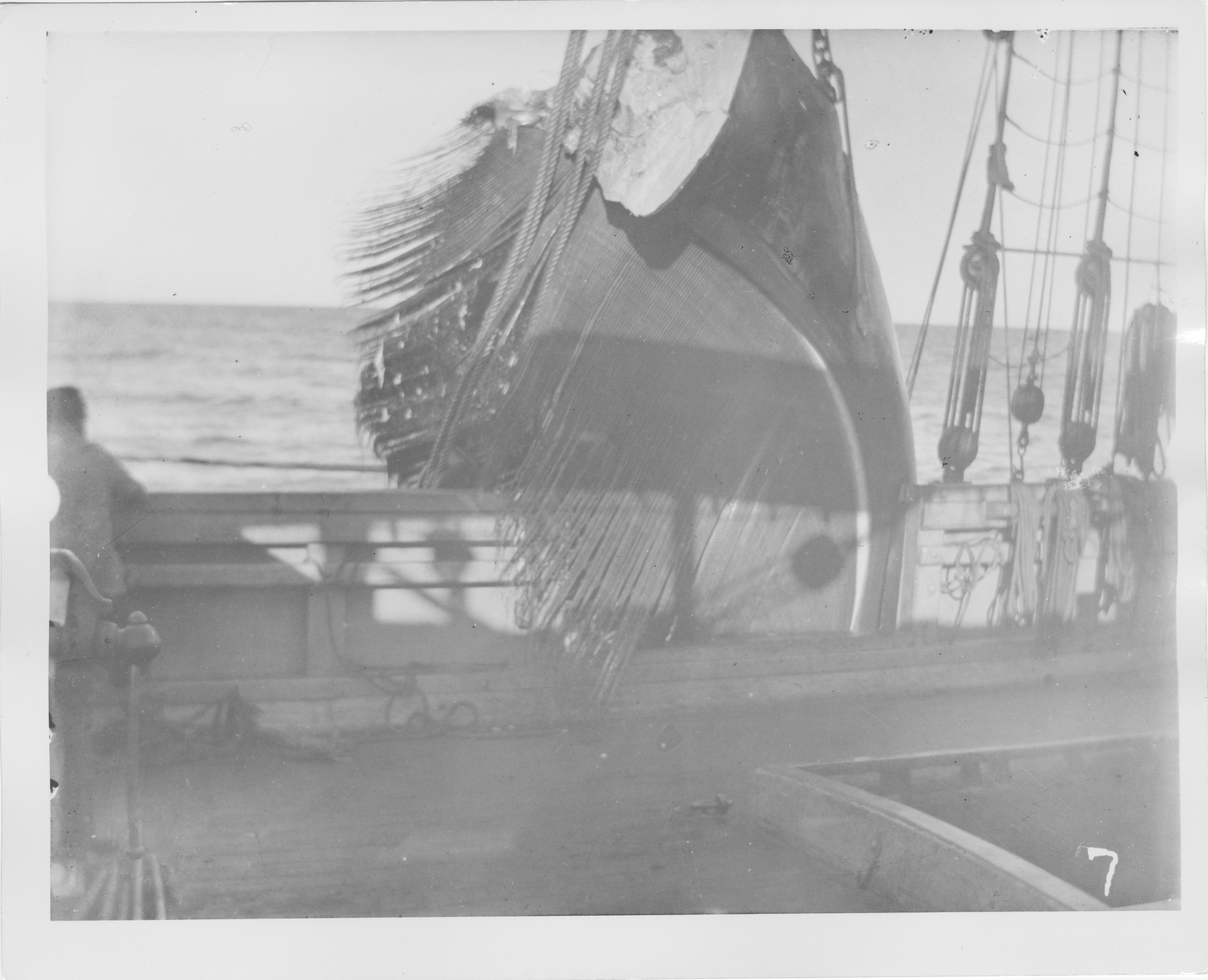
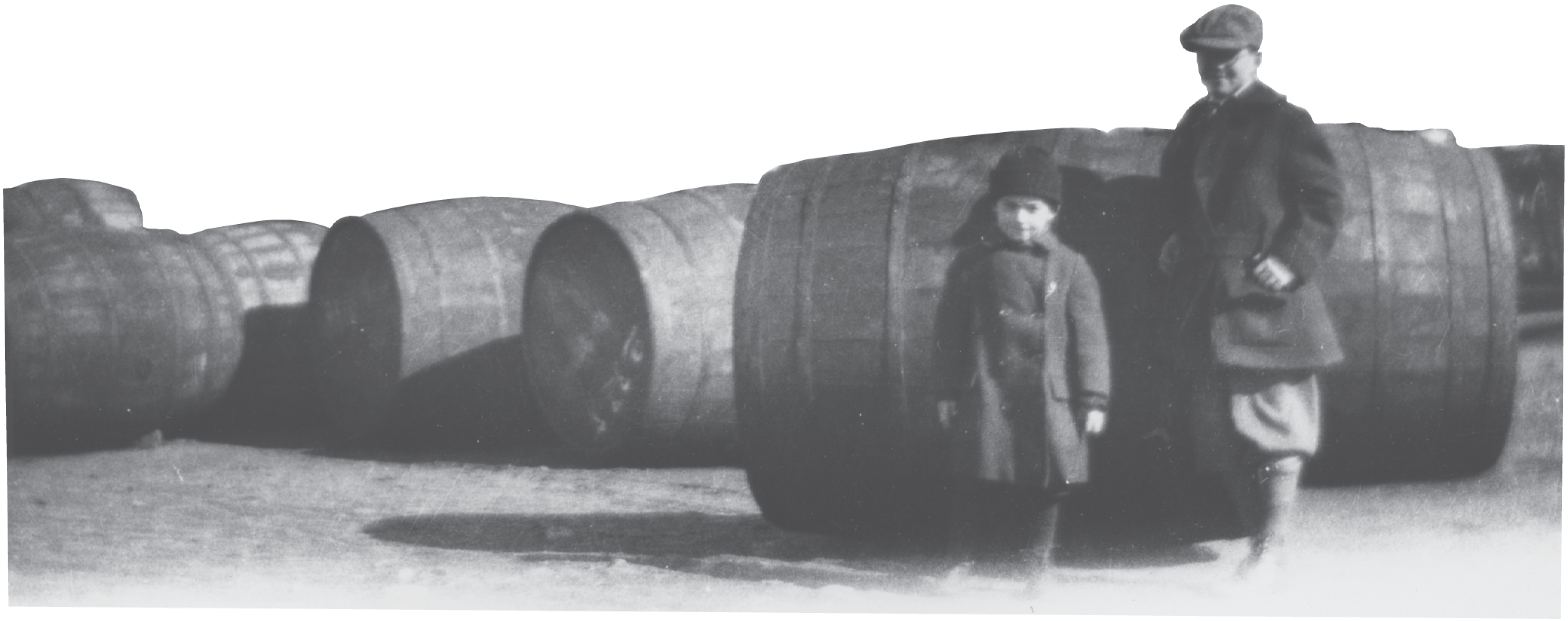
Whalers hauling baleen into a ship, date unknown.
However, the global scope of these voyages came at a cost. By the mid 1800s, vast overfishing depleted whale populations— North Atlantic right whales, prized for being the “right” whale to hunt, were estimated to have less than 100 individuals remaining in the wild. Meanwhile, sperm whales, valued for their spermaceti, adapted to avoid wooden whaling ships by sharing defensive behaviors within their social units.
This scarcity fundamentally altered the nature of a whaling voyage; what began as seasonal expeditions gradually transformed into multi-year journeys, with ships remaining at sea for extended periods in search of increasingly scarce prey. This escalation reflects both ecological depletion and economic pressure. As whales grew harder to find, the cost of outfitting and maintaining voyages rose, while the risks to crews multiplied. Longer voyages meant greater exposure to disease, shipwreck, and conflict, as well as prolonged absences from home that strained the social fabric of coastal communities.
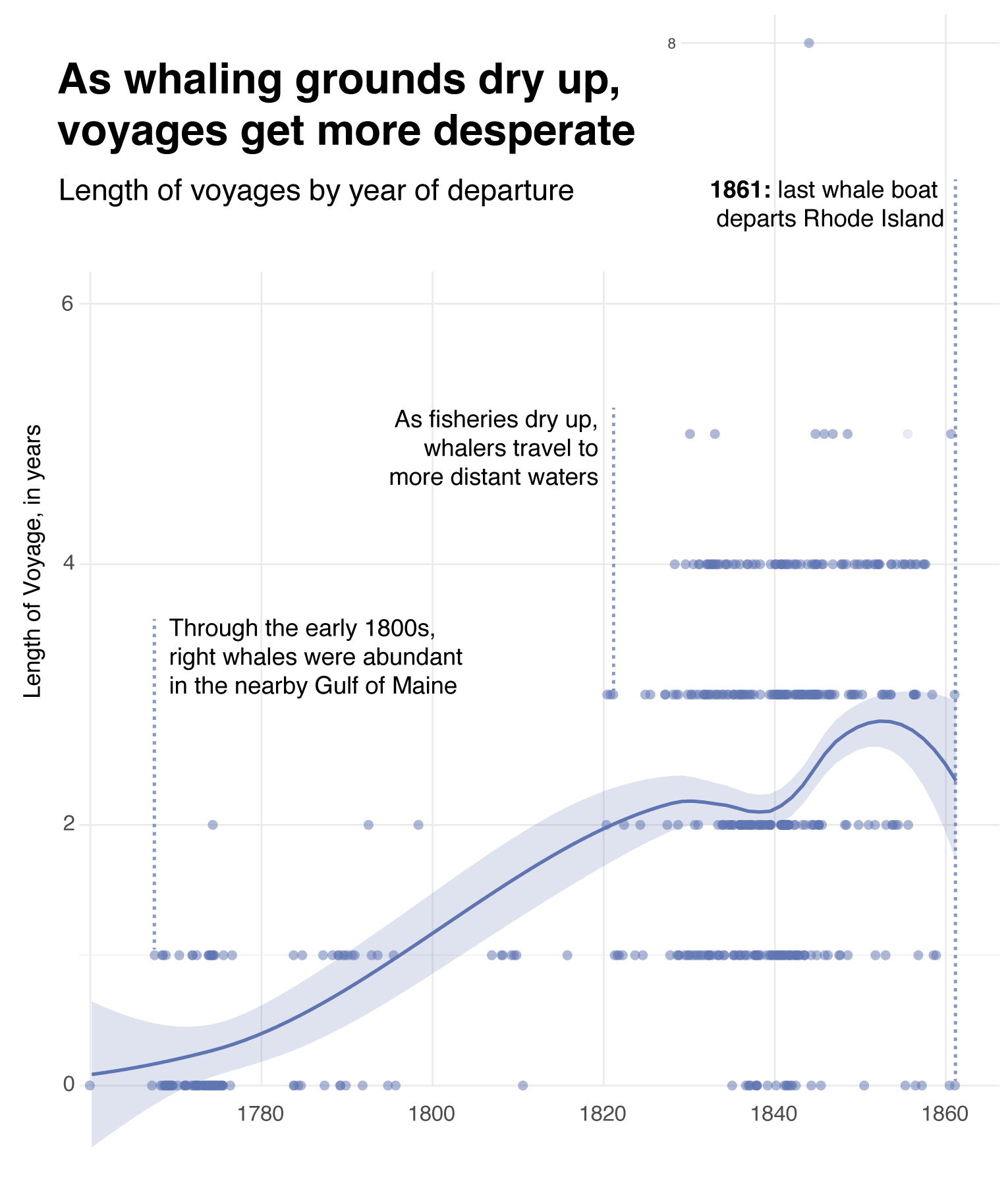
This pattern of expansion followed by depletion underscores a fundamental tension in Rhode Island’s whaling history. The industry exemplified ingenuity and resilience— to kill a whale was to extract light from the depths of the ocean, to build social networks spanning oceans and cultures, to foster Rhode Island’s defining Cabo Verdean and Portuguese populations. Yet, the industry’s very success depended on the unsustainable exploitation of whale populations. The increasing length of voyages symptomatized ecological limits being reached and exceeded.
By the mid-nineteenth century, these limits became impossible to ignore. The rise of alternative sources of illumination, such as kerosene, reduced demand for whale oil, while the declining profitability of long-distance voyages eroded the economic foundation of the industry.
Rhode Island’s whaling ports, once bustling centers of maritime activity, transitioned toward other forms of commerce and industry. The legacy of whaling, however, persisted in the built environment of port towns, in the archival records of voyages, and in the cultural memory of a state shaped by its engagement with the sea.